
A traditional interview will tell you very little about how someone will perform as a recruiter; the CV, even less.
Confidence in an interview doesn't always translate into the ability to run a sales conversation, build rapport with a candidate, or think clearly under pressure. Yet many recruitment businesses still rely heavily on CV screening and traditional interviews when hiring early-career recruiters.
At Trinnovo Group, we've invested heavily in raising the bar in the recruitment industry. Part of this involves giving the next generation of consultants the means to thrive, which includes providing them with a fully tech-enabled environment and a world-class assessment centre.
That philosophy sits at the centre of our assessment centre format. Recently, we expanded that approach by partnering with Rekbot to integrate its AI-powered recruitment simulation platform into our assessment days.
The result was a much clearer picture of how candidates actually perform in realistic recruitment scenarios.
What is a recruitment simulation in hiring?
A recruitment simulation is a structured assessment method where candidates are placed into realistic job scenarios to evaluate their practical skills.
Instead of answering theoretical interview questions, candidates are asked to perform tasks they would encounter in the role itself.
In recruitment hiring, this might include:
-
running a discovery call with a candidate
-
handling objections during a hiring conversation
-
structuring a candidate pitch
-
responding to unexpected questions during a call
This format allows hiring teams to evaluate communication skills, learning agility and commercial instinct in a far more practical way than traditional interviews alone.
For recruitment businesses investing in academy hiring or graduate programmes, simulations offer a clearer way to identify potential.
Why recruitment interviews miss key indicators of potential
Recruitment is ultimately a performance profession.
Success depends on skills that are difficult to measure through conventional interviews alone. These include:
-
building rapport quickly
-
asking the right questions
-
thinking clearly under pressure
-
adapting when conversations move in unexpected directions
A candidate may interview well, but the real test comes when they are speaking with a hiring manager or candidate for the first time.
This is one of the reasons assessment centres have long been part of the Trinnovo Group hiring process, particularly for early-career recruiters. They allow hiring teams to observe behaviour rather than simply hear answers.
How AI-powered recruitment simulations enhance assessment centres
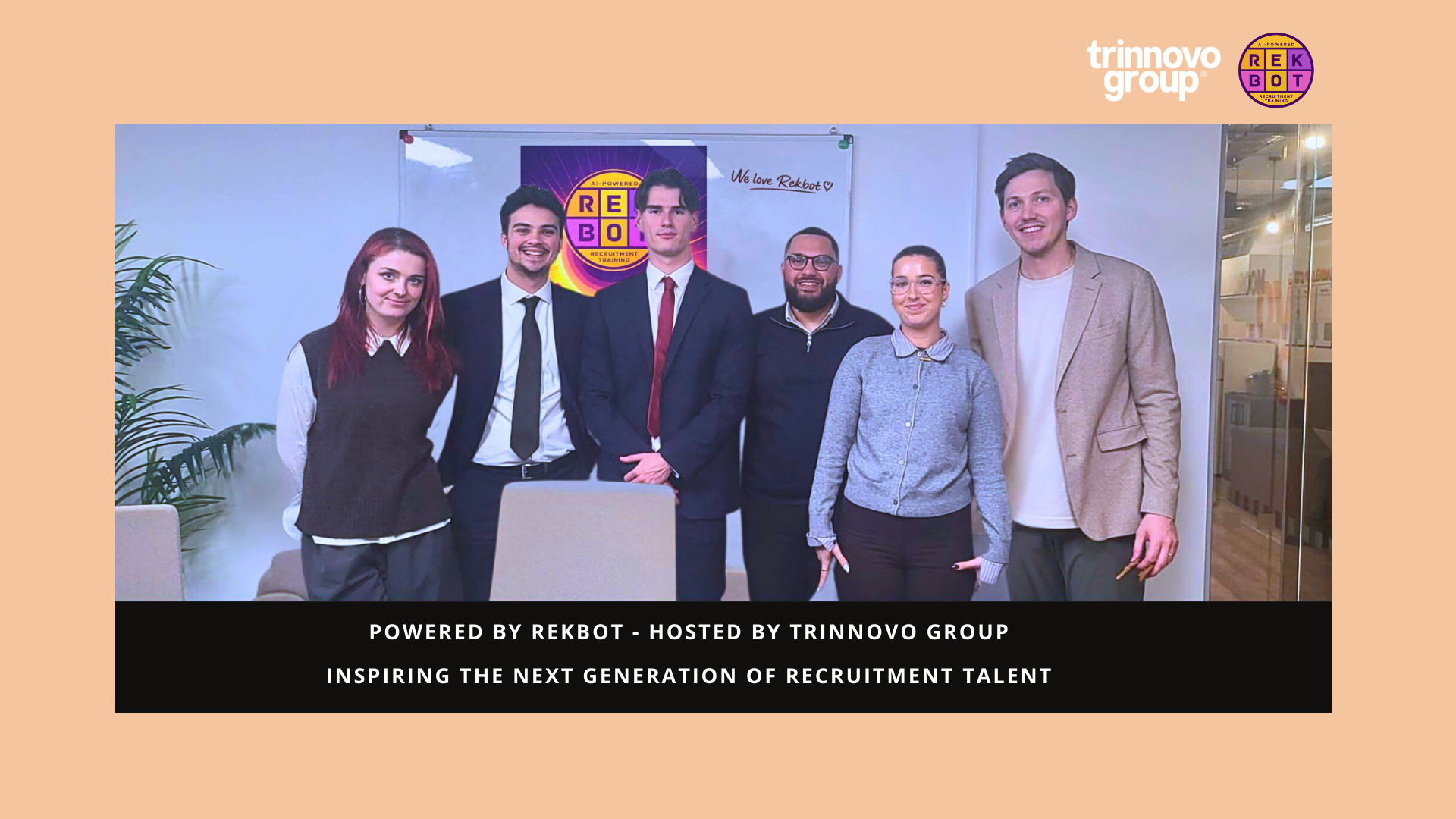
During our recent graduate and rookie assessment day, candidates participated in simulated recruitment calls powered by Rekbot.
Rather than answering interview questions, they were asked to navigate realistic recruitment scenarios where they needed to:
-
structure conversations clearly
-
demonstrate curiosity and listening skills
-
respond to challenges in real time
-
communicate confidently under pressure
The Trinnovo interview panel observed the calls live while Rekbot provided additional performance insights.
This hybrid approach combined human observation with structured performance analytics, giving the hiring team a more complete view of each candidate’s potential.
The most valuable insight: improvement through feedback
One of the most interesting aspects of the day wasn't only identifying strong candidates, but also watching how candidates responded to feedback.
After each simulated call, the panel provided guidance and coaching. Candidates were then placed into another scenario where they could apply what they had learned.
In many cases, the improvement between calls was immediate.
For recruitment hiring managers, this kind of learning agility and coachability is often a strong indicator of future performance.
AI won’t replace the human core of recruitment
There is a lot of noise around AI in recruitment right now.
For the one millionth time, it is worth repeating a simple truth about this industry: people buy from people.
Recruitment is built on trust, credibility and relationships. No technology, no matter how sophisticated, replaces that dynamic.
What AI can do, however, is strengthen the decision-making around it.
Platforms like Rekbot provide structured insight into how candidates communicate, respond to pressure and apply feedback in real time. That information supports better hiring decisions, but it works alongside human judgment rather than replacing it.
True AI enablement in recruitment requires balance. The technology should enhance the process, not dominate it. In a profession built on relationships, the most effective use of AI is thoughtful integration that improves visibility without removing the human element that makes recruitment work.
Why recruitment academies are adopting performance-based hiring
Graduate and rookie hiring in recruitment is ultimately about potential.
Most candidates will not have prior recruitment experience. Hiring decisions ultimately depend on identifying individuals who can develop the skills required for the role.
Performance-based assessments help hiring teams evaluate potential with more precision.
Instead of relying on instinct or interview impressions, they provide observable evidence of how candidates think, communicate and learn.
For organisations investing in recruitment academies, this approach can significantly improve both hiring accuracy and early-stage development.
What this means for organisations partnering with Trinnovo Group
At Trinnovo Group, assessment centres are not simply a hiring tool for our own teams. They are part of a broader philosophy around how talent should be evaluated.
The same principle applies when we support clients with early-career hiring, recruitment academy builds, or talent pipeline development.
When candidates are assessed in realistic scenarios rather than traditional interviews alone, hiring organisations gain a much clearer view of potential.
For our clients, this translates into several practical advantages.
-
It creates stronger hiring decisions. Observing candidates in real conversations provides far greater insight into communication ability, adaptability and commercial instinct than CVs alone.
-
It helps identify learning agility and coachability earlier in the hiring process. These traits are often the strongest indicators of long-term success in recruitment and other people-facing roles.
-
It creates a more consistent and structured evaluation process. Simulation-based assessment allows hiring teams to compare candidates against the same real-world scenarios, reducing the subjectivity that often comes with traditional interviews.
The result is a hiring process that is not only more engaging for candidates, but also far more reliable for organisations making important talent decisions.
For clients building recruitment academies, expanding early-career hiring programmes, or strengthening talent pipelines, this kind of structured assessment model can significantly improve the quality of hires.
What this means for candidates entering the recruitment industry
For candidates considering a career in recruitment, simulation-based assessments provide a more engaging and transparent hiring experience.
Rather than relying solely on CVs, candidates have the opportunity to demonstrate:
-
communication ability
-
resilience in challenging conversations
-
adaptability under pressure
-
the ability to take feedback and improve quickly
For many early-career professionals, this creates a fairer process that focuses on potential rather than previous experience.
Join our next recruitment assessment centre
Trinnovo Group regularly hosts recruitment assessment centres for graduates and professionals exploring a career in recruitment.
These sessions are designed to replicate the real environments recruiters operate in, helping both candidates and hiring managers understand what success in the role looks like.
Our next assessment centre will take place on 19 March.
If you are interested in starting a career in recruitment, please contact Aaron Gonsalves to learn more about upcoming opportunities: aaron.gonsalves@trinnovo.com.
You can also explore more about Trinnovo Group’s recruitment approach and community-led talent on our recruitment page.